What to Do When a Pipe Bursts: Emergency Steps Before the Plumber Arrives
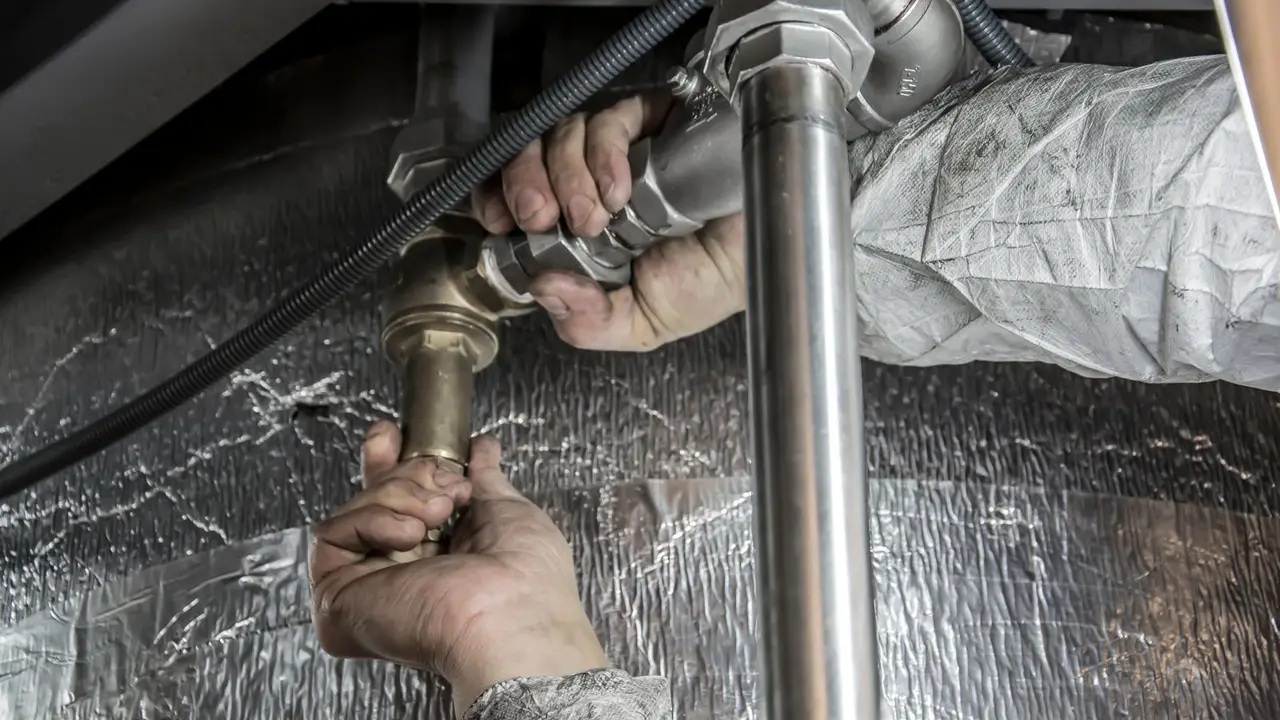
A burst pipe dumps water fast. A split copper line or cracked PEX fitting can release several gallons a minute into a wall cavity or under a slab. Your job in the first ten minutes is simple: stop the water, drain what is left, and keep it away from electrical parts and finished floors.
You do not need plumbing skills to do this. You need to know where your main shutoff is, how to open a hose bib, and what to move out of the way. Everything else waits for the plumber.
| First move | Shut the main water valve |
|---|---|
| Second move | Open low faucets to drain lines |
| Watch out for | Water near outlets and panels |
| Contain | Buckets, towels, and a wet vac |
| Call | A licensed plumber after the water stops |
| Document | Photos before you clean up |
What counts as a burst pipe emergency
A burst pipe emergency is any active leak from a supply line that keeps spraying or pouring water after you shut off the nearest fixture valve.
Supply lines run under pressure, so a split pipe does not drip. It sprays. Water can travel along joists, soak drywall, and reach outlets or a breaker panel. That combination of water and electricity is the real danger, not the plumbing itself.
If the leak is from a drain line, it usually stops when you stop using fixtures. A supply leak does not stop. Treat it as urgent until the main valve is closed.
- Water spraying from a wall or ceiling
- Water pooling near an electrical panel
- A pipe that split during a freeze
- Water running after you closed the fixture valve
Shut off the main water valve first
Find your main shutoff valve, turn it clockwise until it stops, and confirm the water flow at the leak has slowed or stopped.
Most US homes have a main valve near the water meter, in a basement, or in a utility closet. A gate valve turns many times. A ball valve turns a quarter turn. Both close clockwise. Turn firmly but do not force a stuck valve.
If the valve will not budge, call an emergency plumber tyler or your local water utility for the curb stop. For smaller leaks on a fixture, a DIY plumbing repairs approach can work, but a burst pipe is not a DIY job.
Drain the lines and open low faucets
Open the lowest faucet in the house and flush a toilet to drain remaining water from the pipes and reduce pressure at the break.
Even after the main valve closes, the pipes still hold water. Opening a low hose bib or a basement sink lets that water drain out instead of pushing through the split. Flush a toilet once to empty the tank and bowl lines.
Open a faucet on the top floor too. Air entering from above helps water leave faster. Expect some water to keep coming from the break for a minute or two. That is normal.
Contain water and protect electrical areas
Move furniture and electronics away from the leak, place buckets and towels under the flow, and stay clear of wet outlets or a wet panel.
If water is anywhere near an outlet, switch, or breaker panel, do not touch it. Turn off power to that area at the panel only if you can reach it while standing on a dry surface. Otherwise leave the power alone and call for help.
Use a wet vac if you have one. Towels and buckets work fine for smaller flows. Take photos before you clean up. Your insurer will want them. A how to unclog a drain guide covers clogs, not pressure leaks, so do not confuse the two.
- Kill power to affected rooms if it is safe
- Move rugs, furniture, and electronics
- Place buckets under the leak
- Use towels or a wet vac on standing water
- Photograph everything before cleanup
What to tell the plumber and what to avoid
Give the plumber your address, the location of the leak, whether the main valve is closed, and whether water is near electrical parts.
Say what kind of pipe it is if you know: copper, PEX, CPVC, or galvanized. Mention the age of the home and whether the pipe froze. That helps them load the right fittings. Do not try to patch a pressurized line with tape or epoxy.
Avoid running any water, including the dishwasher or washing machine. Do not use a plunger on a supply line. If a fixture valve is also failing, a how to fix a leaky faucet guide is useful later, not now.
Frequently asked questions
Can I just shut off the fixture valve instead of the main?
Only if the leak is downstream of that valve. A burst pipe in a wall or ceiling is usually upstream, so the main valve is the only reliable stop.
How long can water run before damage is serious?
It depends on the pipe size and pressure. A small split can soak drywall within minutes, while a larger break can flood a room in under an hour.
Should I call my insurer before or after the plumber?
Call the plumber first to stop the water, then call your insurer. Take photos before cleanup so the claim is easier to document.